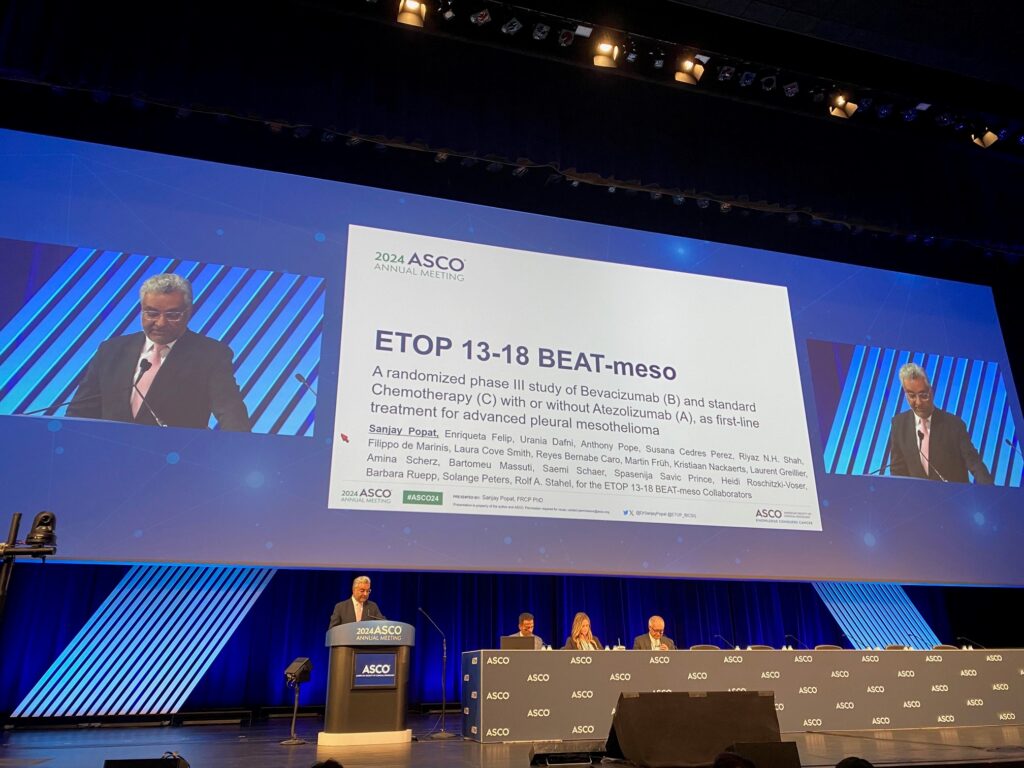
The phase 3 clinical trial known as BEAT-meso, which combines chemotherapy plus bevacizumab with immunotherapy, has shown an improvement in overall survival (OS) and progression-free survival (PFS) in patients with non-epitheliod (sarcomatoid and biphasic) mesothelioma, as reported during the American Society for Clinical Oncology’s (ASCO) annual meeting. The study did not meet its primary endpoint of overall survival, but it did meet its secondary endpoint of progression-free survival.
The study sought to understand the effectiveness of immunotherapy when combined with chemotherapy plus bevacizumab in the treatment of mesothelioma.
Study Design
The study enrolled 400 previously untreated patients with unresectable pleural mesothelioma.
Participants were randomized into two groups of two hundred each:
- one group was treated with the standard of care chemotherapy (pemetrexed/carboplatin) along with bevacizumab (also known as Avastin, an agent that limits the blood supply into the tumor). This was the control group.
- the other group was treated with the same drugs as the first group but in addition received a the immunotherapy, a checkpoint inhibitor called atezolizumab. This was the experimental group.
Results
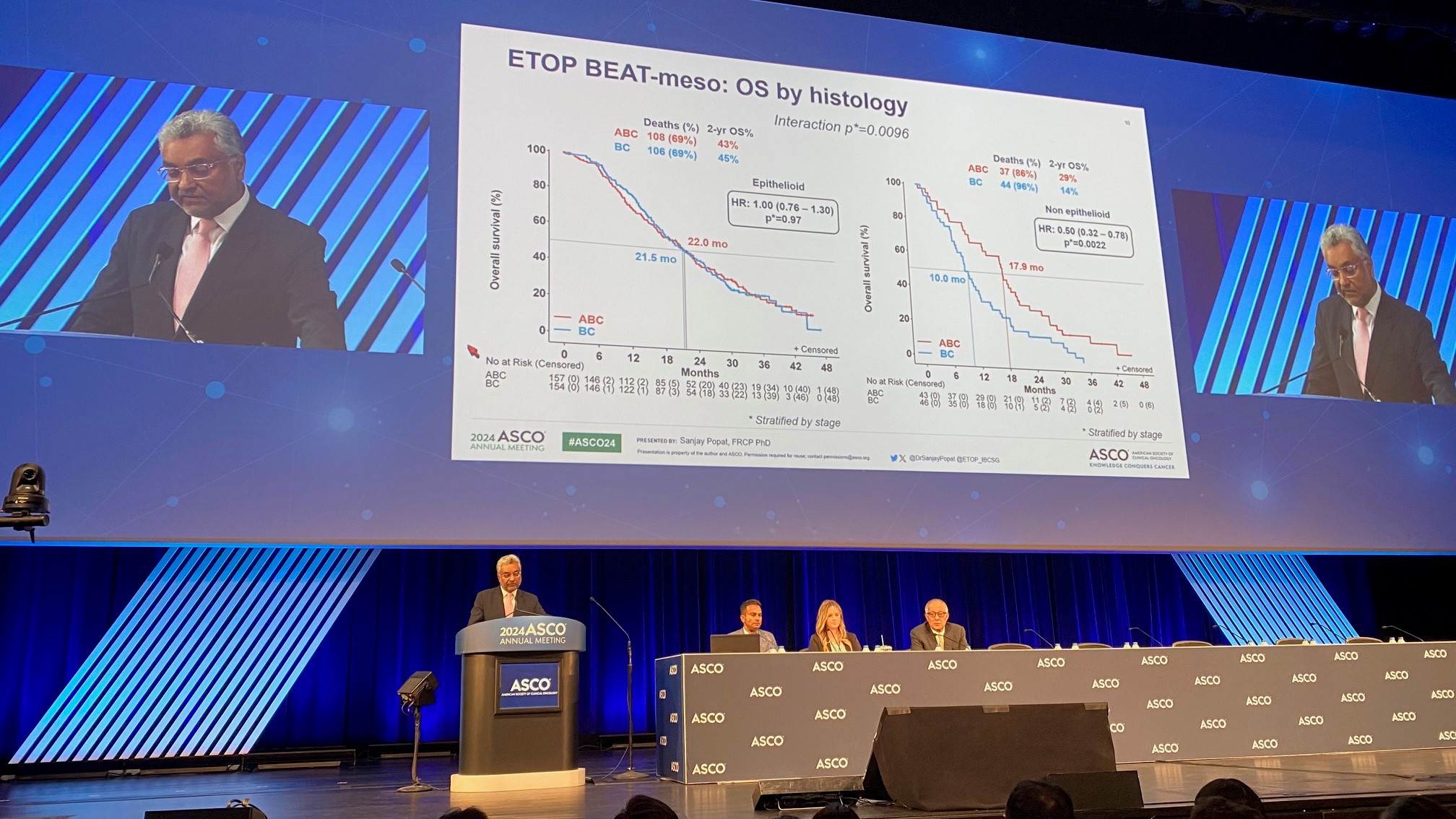
The two-year OS (overall survival) was 40% in the experimental group vs. 38%, which was not significant. If we look at the histology, in the non-epitheliod histology group, OS was 29% in the experimental arm vs. 14% in the control arm, which was a significant improvement.
A benefit in OS was also seen in the subset of patients expressing more than 1% PD-L1 TPS (PDL-1 is a protein expression on cells and a potential target for anti-cancer immunotherapy.)
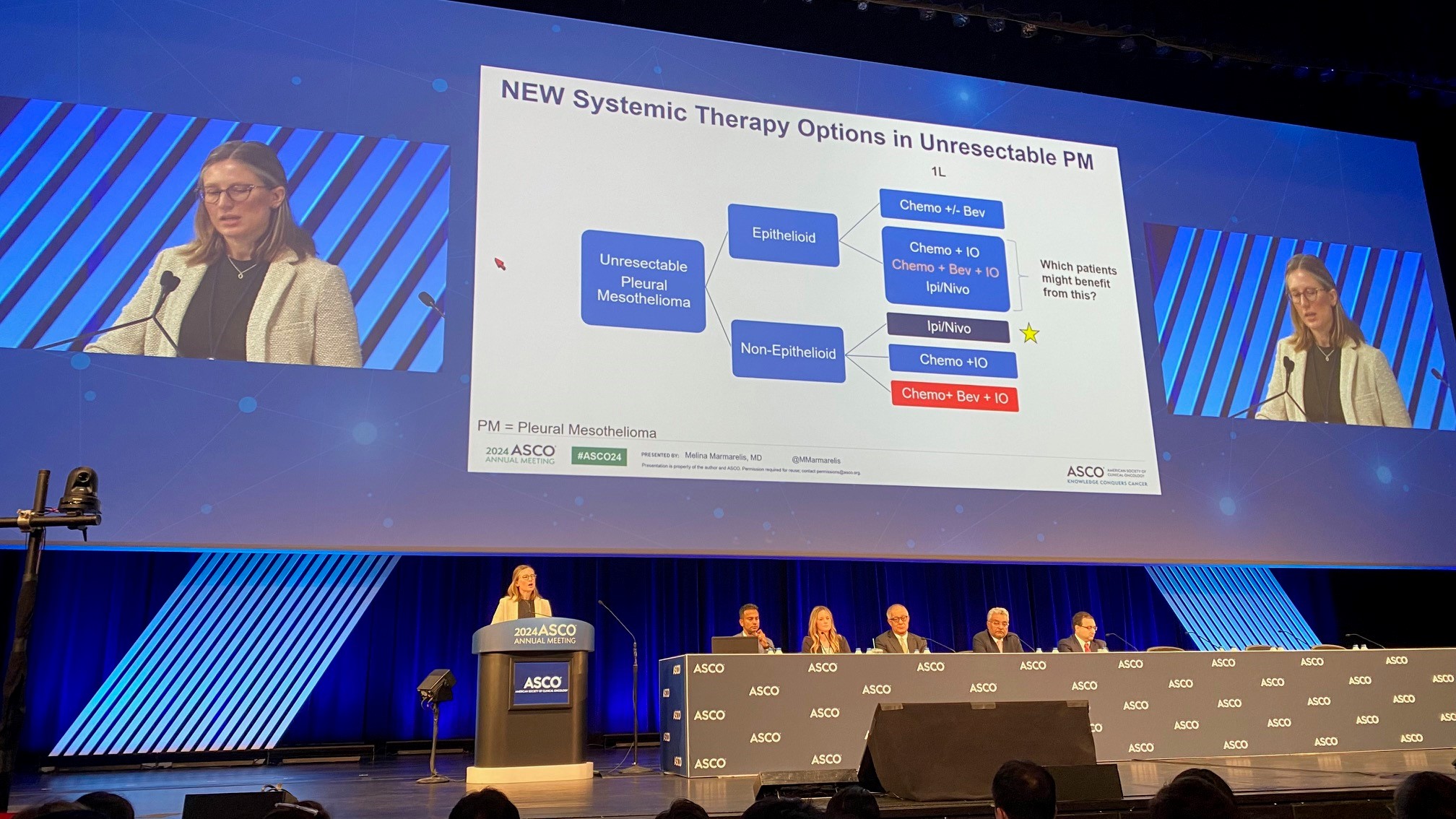
With this study, patients with non-epitheliod mesothelioma gained one additional treatment option that shows improved benefit over chemotherapy alone. The study was led by Dr. Sanjay Popat, a medical oncologist at the Royal Marsden hospital in the United Kingdom and a former board member of The Mesothelioma Foundation. Dr. Melina Marmarelis, UPenn, was the discussant. Dr. Marmarelis regularly participates in The Mesothelioma Foundation’s educational programming including MesoTV and the International Symposium on Malignant Mesothelioma.