For many homeowners, renovation projects are an exciting opportunity to update a kitchen, remodel a bathroom, replace old flooring, or finally tackle that room that has been on the to-do list for years. But if you live in an older home, there is an important question to ask before the demolition begins: Could asbestos be present?
Asbestos was widely used throughout the 20th century because its fibers are strong and resistant to fire. It was incorporated into thousands of building products: insulation, flooring, roofing, siding, ceiling materials, and pipe insulation. Although many asbestos uses were restricted in the United States beginning in the 1970s, asbestos-containing materials remain in older homes today.
The concern isn’t simply that asbestos exists in a home. The greatest risk occurs when asbestos-containing materials are damaged or disturbed, and fibers become airborne and are inhaled. Renovation, demolition, sanding, drilling, scraping, cutting, and other activities can create opportunities for exposure.
Where Could Asbestos Be Found in Your Home?
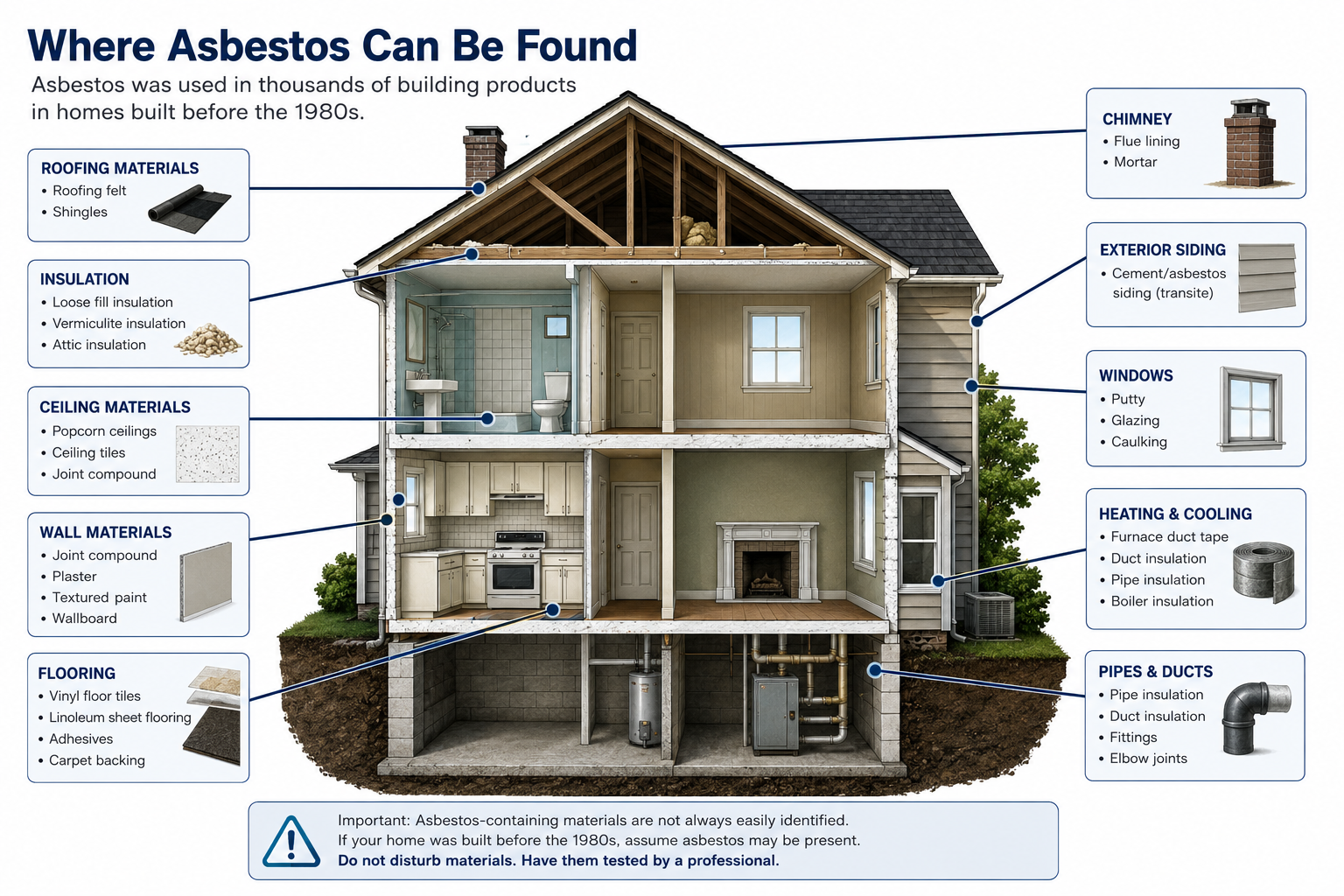
If your home was built several decades ago, asbestos may be present in materials throughout the house. You cannot determine whether something contains asbestos simply by looking at it, but some common places to be aware of include:
Flooring
- Vinyl floor tiles
- Vinyl sheet flooring and its backing
- Flooring adhesives
- Some older resilient flooring products
Ceilings and Walls
- Popcorn or textured ceilings
- Ceiling tiles
- Joint compound
- Plaster
- Wallboard or other wall materials
- Textured paints and coatings
Insulation
- Vermiculite attic insulation
- Pipe insulation
- Furnace and boiler insulation
- Insulation around heating systems
Roofing and Exterior Materials
- Some roofing shingles and felt
- Cement-asbestos siding
- Exterior panels and other cement products
Heating, Plumbing and Electrical Systems
- Insulation around hot-water and steam pipes
- Furnace and boiler insulation
- Duct insulation
- Certain gaskets and other heat-resistant components
Asbestos may also be present in materials around wood-burning stoves and fireplaces, including cement sheets, millboard, and other heat-resistant products.
Why Home Renovation Can Be a Concern
A material containing asbestos may not pose an immediate hazard if it is intact, in good condition, and left undisturbed. Problems can arise when renovation activities damage the material.
For example, removing an old floor could involve scraping or sanding asbestos-containing flooring or adhesive. Opening walls could disturb insulation or joint compounds. Replacing pipes could disturb old pipe insulation. Sanding a ceiling or drilling into walls could release fibers from asbestos-containing materials.
Once airborne, asbestos fibers are small enough to be inhaled. Exposure to asbestos is associated with serious diseases, including mesothelioma, lung cancer, and other asbestos-related diseases.
This is why identifying potential asbestos before starting a renovation project is so important.
How Do You Know If Something Contains Asbestos?
Unfortunately, you generally cannot tell by looking at a material.
The age, appearance, color, or texture of a product cannot reliably confirm whether asbestos is present. The only way to know for certain is to have the material tested by a qualified laboratory.
If you are planning a renovation that could disturb a suspected asbestos-containing material, or if the material is damaged, the U.S. Environmental Protection Agency recommends having it sampled by a properly trained and accredited asbestos professional.
Do not take samples yourself simply because a material looks suspicious. Improper sampling can release fibers into the air. A trained professional knows how to identify materials that warrant testing and how to collect samples appropriately.
What Should You Do If You Find Asbestos?
First, don’t panic and don’t disturb it.
If a material is suspected of containing asbestos and is in good condition, the safest approach may be to leave it alone. Asbestos-containing material that remains intact and undisturbed is much less likely to release fibers.
If the material is damaged, crumbling, fraying, or will be affected by your renovation:
- Stop work in the area.
- Do not touch, cut, sand, scrape, drill, or remove the material.
- Keep children and pets away from the area.
- Do not sweep or vacuum suspected asbestos debris with a regular vacuum.
- Contact a trained and accredited asbestos professional.
- Find out what testing, repair, encapsulation, or removal is appropriate.
- Check state and local requirements before beginning asbestos-related work.
If asbestos-containing materials need to be repaired or removed, EPA and CPSC recommend using professionals who are trained and qualified to perform the work safely. Improper removal can increase the risk of exposure and spread contamination to other areas of the home.
Asbestos Safety Tips for Homeowners
Whether you’re planning a major renovation or simply maintaining an older home, keep these precautions in mind:
Before you renovate
- Determine the age of your home and research its renovation history.
- Identify materials that could potentially contain asbestos.
- Have suspect materials professionally assessed before disturbing them.
- Tell your contractor about any known or suspected asbestos-containing materials.
- Make sure contractors understand applicable state and local requirements.
During renovation
- Never assume an old material is asbestos-free because it looks harmless.
- Don’t sand, saw, drill, scrape, grind, or break suspected asbestos-containing materials.
- Keep people and pets away from areas where suspected materials may be disturbed.
- Do not use ordinary household vacuums on suspected asbestos debris.
- Use qualified professionals when asbestos-containing materials need to be repaired or removed.
If you discover something unexpectedly
- Stop work.
- Leave the material alone.
- Keep others away from the area.
- Contact an asbestos professional for guidance and testing.
A Renovation Shouldn’t Put Your Health at Risk
Home improvement projects can make our homes safer, more comfortable, and more enjoyable, but older homes can come with hidden hazards.
The best time to think about asbestos is before the first wall comes down or the first floor tile comes up.
If your home contains asbestos, that doesn’t necessarily mean you need to remove it. In many cases, the safest approach is to leave intact materials alone and prevent them from being disturbed. If renovation or damage makes professional intervention necessary, qualified asbestos professionals can help determine the safest course of action.
At The Mesothelioma Foundation, we know that asbestos exposure can have lifelong consequences. Understanding where asbestos may be found and taking precautions before disturbing older building materials is one important step toward preventing exposure.
Before you renovate: Stop. Look. Ask. Test. Protect.
This article is intended for educational purposes and is not a substitute for professional asbestos inspection, testing, removal guidance, or medical advice. Requirements for asbestos work vary by location. Contact your state or local environmental or health agency for information about applicable requirements and qualified professionals.